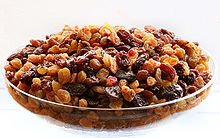

100 grams of raisins contains about 300 calories and is composed of approximately 75% carbohydrates, 5.3% fiber, 2.8% protein, 0-4% fat and is rich in potassium.



Iranian Pistachio
October 2, 2016
Raisin Health Benefits That Will Surprise
May 30, 2020A raisin is a dried grape. Raisins are produced in many regions of the world and may be eaten raw or used in cooking, baking, and brewing. In the United Kingdom, Ireland, New Zealand, and Australia, the word “raisin” is reserved for the dark-coloured dried large grape, with “sultana” being a golden-coloured dried grape, and “currant” being a dried small Black Corinth seedless grape.
The word “raisin” dates back to Middle English and is a loanword from Old French; in modern French, raisin means “grape”, while a dried grape is a raisin sec, or “dry grape”. The Old French word, in turn, developed from the Latin word racemus, “a bunch of grapes”.
Raisin varieties depend on the type of grape used, and are made in a variety of sizes and colors including green, black, brown, blue, purple, and yellow. Seedless varieties include the sultana (the common American type is known as Thompson Seedless in the USA), the Greek currants (black corinthian raisins, Vitis vinifera L. var. Apyrena) and Flame grapes. Raisins are traditionally sun-dried, but may also be water-dipped and artificially dehydrated.
“Golden raisins” are treated with sulfur dioxide after drying to give them their golden color.
Black Corinth or Zante currant are miniature, sometimes seedless raisins that are much darker and have a tart, tangy flavor. They are often called currants. Muscat raisins are large compared to other varieties, and also sweeter.
Several varieties of raisins produced in Asia are available in the West only at ethnic grocers. Monukka grapes are used for some of these.
Raisins can contain up to 72% sugars by weight, most of which is fructose and glucose. They also contain about 3% protein and 3.7%–6.8% dietary fiber. Raisins, like prunes and apricots, are also high in certain antioxidants, but have a lower vitamin C content than fresh grapes. Raisins are low in sodium and contain no cholesterol.
Data presented at the American College of Cardiology’s 61st Annual Scientific Session in 2012 suggest that, among individuals with mild increases in blood pressure, the routine consumption of raisins (three times a day) may significantly lower blood pressure, especially when compared to eating other common snacks.
Related posts
Saffron
October 2, 2016About Us
January 31, 2022TYPES OF RAISINS
Iranian raisins come in different colors and are differentiated according to the drying procedure.
DARK RAISINS
This kind is prepared by drying the fruit in full sun and results in a dark color.

GOLDEN RAISINS
This kind is oven-dried and then sulfur is added to preserve its color.

SULTANA RAISINS
This kind is brown and is the most popular variety.

GREEN RAISINS
This kind is naturally green, but sulfur is added to bring out a brighter color.

The history of raisin
The raisin was discovered accidentally, many years before Christ. People ate grapes but did not know that if they were to dry the grape, it would become this useful and delicious dried fruit called the raisin. Historians claim that the Phoenicians and Armenians were the first nations to produce raisins. Phoenicians established vineyards in Spain and Greece that were fitting for cultivating raisins and the Armenians established their vineyards in Iran, Turkey and Iraq. The Greeks and Romans had a high demand for raisins and then other countries started to use raisins as well.
Botany of the grape
The grape is from the vitaceae family and has more than 800 varieties. The most common variety of grape is the vinifera. Grapes can be different colors, such as green, red, purple and yellow. Grapes can be eaten plain or processed into raisins, fruit juice and marmalade.